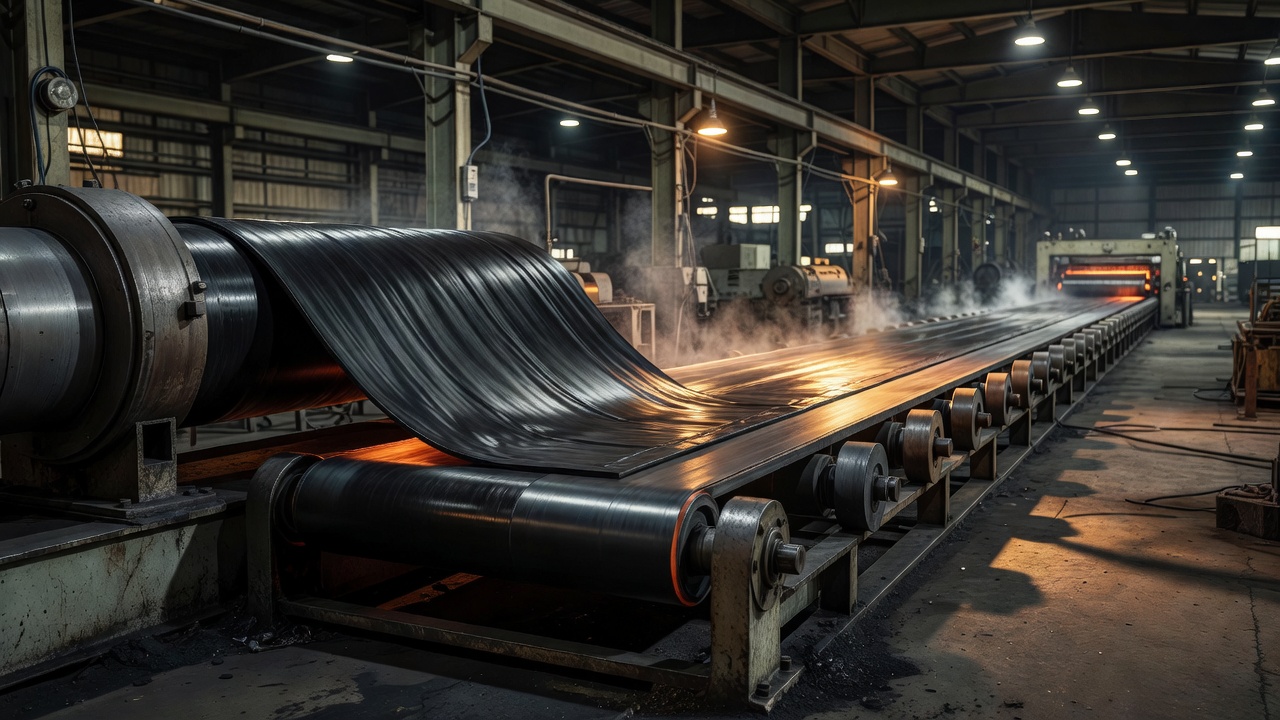
The Art of Shaping Rubber
Once a rubber compound is mixed with its specific cure package, it must be shaped before the heat of vulcanization sets it permanently. The industrial sector utilizes several primary methods to achieve tight tolerances and mass production scalability.
1. Injection Molding
Rubber injection molding is an evolution of plastics molding, heavily modified to handle the high viscosity and thermosetting nature of rubber. A continuous strip of uncured rubber is fed into a rotating screw mechanism. The screw mechanically works the material, heating it slightly to lower its viscosity.
A ram then injects the pre-warmed rubber into a closed, heated mold cavity at extremely high pressure. Because the material is injected into an already hot mold, vulcanization begins immediately.
2. Compression Molding
The oldest and simplest method. A pre-weighed, un-vulcanized slug of rubber (often called a "pre-form") is placed directly into the cavity of a heated mold. A massive hydraulic press closes the mold, squishing the rubber into every crevice while simultaneously heating it to the curing temperature.
- Pros: Excellent for large, bulky parts (like vibration mounts or oversized gaskets). Tooling is significantly cheaper than injection molds.
- Cons: Longer cure times, highly manual loading, and generates excess "flash" that must be trimmed by hand or cryogenic tumbling later.
3. Transfer Molding
A hybrid between compression and injection. The raw rubber is loaded into a separate "pot" directly above the mold. A piston forces the rubber through small channels (sprues) into the closed mold cavity below. This method is highly effective when inserting delicate metal or plastic components into the mold that would be crushed by raw compression molding (e.g., spark plug boots or bonded metal-rubber dampers).
4. Extrusion
For continuous profiles like weather stripping, hoses, and tubing, extrusion is the method of choice. Rubber is forced through a shaped die (much like a pasta maker). The uncured profile is then passed through a continuous curing oven (using microwaves, hot air, or liquid salt baths) to vulcanize the strip in real-time as it moves down the factory line.